The global transportation and logistics network relies heavily on the structural integrity of towing components to ensure the safe movement of goods. Among these, the development of robust trailer axles and coupling systems has become a cornerstone for industrial efficiency, enabling the transport of heavy machinery and bulk materials across diverse terrains. Understanding the engineering behind these components is essential for fleet managers aiming to maximize uptime and safety.
From a global economic perspective, the demand for high-capacity towing solutions is rising as infrastructure projects expand in emerging markets. The integration of high-strength materials and precision forging allows for higher load capacities while maintaining a manageable vehicle footprint. This evolution addresses the critical challenge of balancing payload maximization with stringent road safety regulations and vehicle wear limits.
Selecting the correct hardware, including specialized trailer axles and heavy-duty couplings, can significantly reduce operational costs by preventing catastrophic failures and reducing maintenance cycles. By focusing on material science and standardized installation, businesses can ensure their fleet remains compliant with international standards while operating at peak performance.
The Engineering Fundamentals of Trailer Axles
The fundamental role of trailer axles is to support the weight of the cargo while facilitating smooth rotation and steering. In heavy-duty applications, these components must withstand immense vertical pressure and lateral stress during turns. The engineering focus is typically on the synergy between the axle beam and the coupling mechanism, ensuring that the traction force—often reaching up to 280KN in premium models—is distributed evenly across the chassis.
Modern axle design incorporates European standards for installation dimensions to ensure cross-compatibility across different trailer brands. By utilizing precision-engineered air pipes (typically 8mm in diameter) and optimized cylinder working pressures of around 0.8MPa, these systems provide the necessary stability and braking response required for commercial hauling, effectively bridging the gap between the towing vehicle and the load.
Material Specifications and Durability Standards
Durability in towing components begins with the selection of high-grade alloys. For heavy-duty performance, the use of 42CrMo material is industry-standard due to its excellent strength-to-weight ratio and fatigue resistance. When this material is subjected to a strict quenching and tempering process, it achieves a hardness level of HRC28-32, which is critical for preventing deformation under extreme loads.
Beyond the core metal, corrosion resistance is a primary concern for operators in coastal or chemical-heavy environments. The application of specialized coatings or the use of stainless steel variants prevents oxidation from compromising the structural integrity of the coupling and axle interfaces. This ensures that the locking mechanisms remain smooth and reliable over years of service.
Adhering to certified manufacturing standards is the only way to guarantee that these materials perform as expected. Certified producers ensure that every component undergoes rigorous stress testing to verify that the traction and pressure ratings are not just theoretical, but functional in real-world, high-stress industrial scenarios.
Analyzing Load Distribution and Stability
Effective load distribution is the key to preventing "trailer sway" and ensuring the safety of the driver. When configuring trailer axles, the placement of the axle relative to the center of gravity determines how much tongue weight is transferred to the towing vehicle. Proper alignment reduces the risk of detachment and enhances braking performance.
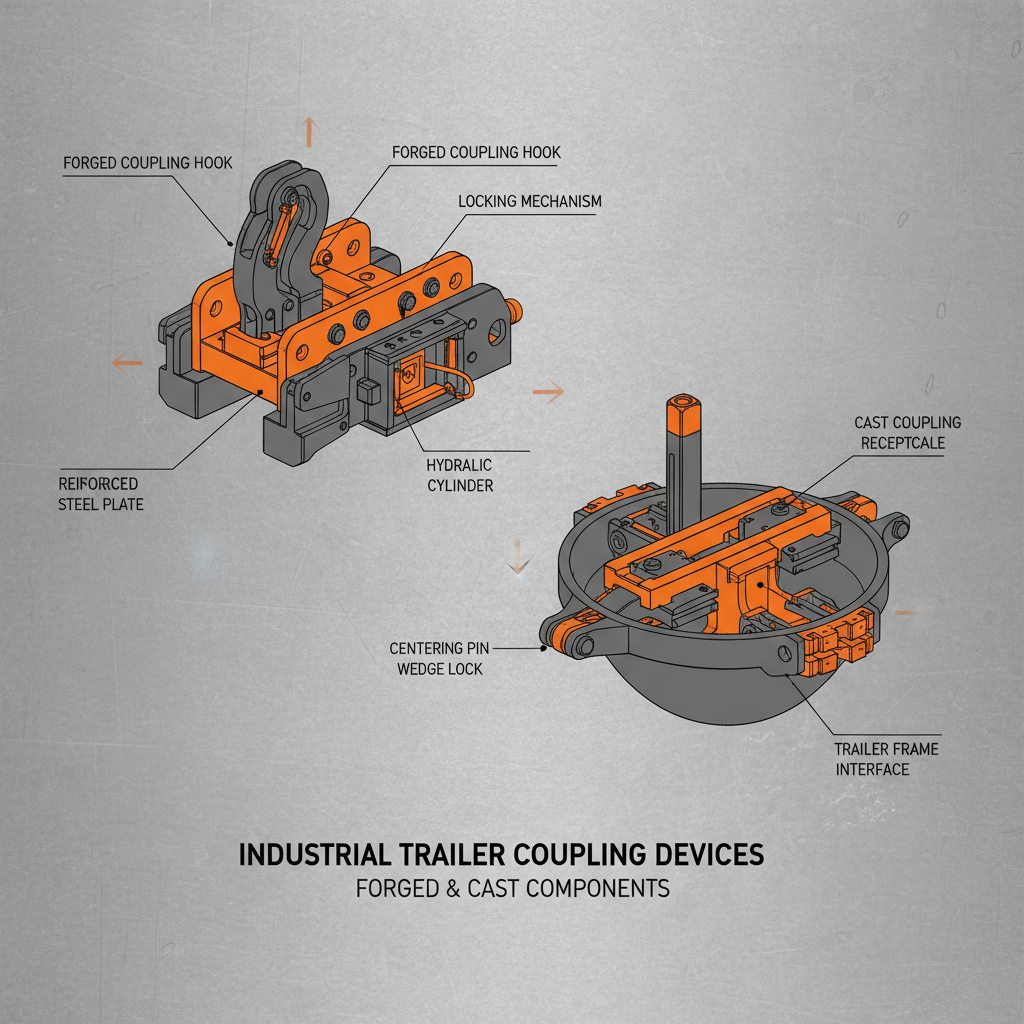
For specialized loads, such as those up to 3500kg, the choice between a 50mm and a 2-inch coupling becomes critical. While both serve to connect the vehicle, the 50mm standard is prevalent in European markets, whereas the 2-inch is common in North America. Using a mismatch can lead to instability in the trailer axles, increasing the wear on the hitch ball and reducing overall road safety.
Stability is further enhanced through the use of reinforced locking mechanisms. In industrial applications where rugged terrain is common, pintle hooks or gooseneck couplings are often preferred over standard ball couplings because they distribute weight more effectively over the towing vehicle's axle, reducing the strain on the front steering assembly.
Comparative Performance of Axle Configurations
Different axle configurations offer varying levels of stability and load capacity. While single-axle setups provide better maneuverability for light loads, multi-axle configurations are essential for heavy-duty hauling to distribute the tonnage and prevent road surface damage. The efficiency of these configurations depends heavily on the synchronization of the braking system and the structural rigidity of the forged components.
Comparing the performance metrics of various axle types reveals that forged alloy steel consistently outperforms cast iron in terms of lifespan and shock absorption. For fleets operating in agriculture or construction, the ability to handle repeated high-stress cycles without developing micro-fractures is the primary metric for success.
Load Capacity and Stability Ratings by Axle Type
Global Industrial Applications and Use Cases
In the agricultural sector, particularly in regions like Russia and North America, heavy-duty towing equipment is used to move massive seed drills and harvesters across uneven fields. These applications demand couplings and axles that can resist corrosion from fertilizers and withstand the jarring impact of off-road transit without failing.
Logistics companies in Europe and Mexico utilize high-capacity 3500kg couplings to streamline the transport of industrial parts. By standardizing their fleets with European-spec dimensions, these companies reduce downtime during maintenance, as replacement parts for their trailer axles can be sourced and installed quickly across different regions.
Long-Term Value and Maintenance Strategies
The long-term value of an investment in premium towing hardware is realized through reduced Total Cost of Ownership (TCO). While high-grade forged components have a higher initial cost, they significantly lower the frequency of replacements and the risk of costly accidents caused by mechanical failure during transit.
A proactive maintenance schedule is essential for optimizing performance. This includes regular lubrication of all moving parts within the coupling and the inspection of axle seals to prevent contaminants from entering the bearings. Checking for signs of metal fatigue or corrosion on the 42CrMo structures ensures that the equipment remains safe for heavy-duty use.
Furthermore, training drivers on correct load distribution and the proper attachment of the coupling prevents premature wear. When the load is balanced, the stress on the trailer axles is minimized, which in turn improves fuel efficiency and reduces the wear and tear on the towing vehicle's transmission and braking system.
Future Innovations in Towing Technology
The future of towing is moving toward "intelligent" axle systems that can monitor load distribution in real-time. By integrating sensors into the axle beam, fleet managers can receive alerts when a trailer is unbalanced or when a component is approaching its fatigue limit, shifting maintenance from a reactive to a predictive model.
Material science is also evolving, with the exploration of nano-coatings that provide near-absolute corrosion resistance for fleets operating in extreme saltwater environments. These innovations, combined with the move toward lightweight yet stronger alloys, will allow for even higher payload capacities without increasing the overall weight of the trailer.
Sustainability is also playing a role, as manufacturers look for ways to recycle high-strength alloy steel and reduce the carbon footprint of the forging process. The goal is to create a circular economy where heavy-duty towing components are designed for easy disassembly and remanufacturing.
Technical Analysis of Modern Towing Component Specifications
| Component Type |
Material/Standard |
Performance Metric |
Ideal Application |
| Heavy-Duty Axle |
Forged 42CrMo |
HRC28-32 Hardness |
Industrial Mining |
| Trailer Coupling |
Alloy Steel |
280KN Traction |
Commercial Freight |
| Pneumatic System |
8mm Air Pipes |
0.8MPa Pressure |
European Trailers |
| Medium Coupling |
Carbon Steel |
3500kg Capacity |
Light Logistics |
| Coastal Axle |
Coated Stainless |
Anti-Corrosive |
Marine Transport |
| Gooseneck Link |
Forged Steel |
High Stability |
Agricultural Equipment |
FAQS
For a 3.5-ton load, you should select a trailer coupling specifically rated for 3500kg. Ensure that the trailer axles are engineered to distribute this weight evenly and that the coupling size (50mm or 2 inch) matches your towing vehicle's hitch ball. Using reinforced alloy steel components like 42CrMo ensures the system can handle the stress without permanent deformation.
The primary difference is the diameter of the hitch ball they fit. 50mm is the European standard, while 2 inch is widely used in North America. Using the incorrect size can lead to instability and potential detachment. It is critical to match the coupling to the ball to maintain the structural integrity of the trailer axles during transit.
42CrMo is a high-strength alloy steel that offers an exceptional balance of toughness and hardness. When quenched and tempered to HRC28-32, it provides the fatigue resistance necessary to handle traction forces up to 280KN, making it far more durable than standard carbon steel for industrial applications.
For commercial fleets, a weekly visual inspection and monthly deep lubrication are recommended. You should check for signs of wear, corrosion, or looseness in the locking pin. Regular maintenance prevents the "rattling" effect and ensures that the connection remains secure, protecting the trailer axles from uneven stress.
While ball couplings are excellent for light to medium loads on paved roads, industrial operators typically prefer pintle hooks or gooseneck couplings for rugged terrain. These options provide superior durability and better weight distribution, which is essential for preventing axle failure in high-stress environments.
Common signs include excessive tire wear, a noticeable "sag" in the trailer frame, and instability or swaying at highway speeds. If you notice the coupling is wearing down prematurely or the brakes are taking longer to engage, it is a strong indication that the load exceeds the axle's rated capacity.
Conclusion
Ensuring the reliability of towing operations requires a holistic approach that combines high-strength materials, such as forged 42CrMo steel, with precise engineering and a commitment to regular maintenance. By aligning the specifications of trailer axles and couplings with the actual load requirements and regional standards, businesses can maximize their operational efficiency while ensuring the safety of their drivers and cargo.
As the industry moves toward more sustainable and intelligent transport solutions, investing in premium, certified components today will provide a foundation for future upgrades. We encourage fleet operators to prioritize quality and precision to reduce long-term costs and enhance fleet longevity. Visit our website for more professional solutions: www.manufacturing-base.com