- Tel: +86 311 82620404
- Cell: 86 -13739710551
- Email: sales@potentia.cn

The efficiency of dual-mode Rail-Road Vehicles (RRVs) hinges on the critical intersection of metallurgy and mechanical design, specifically where the wheel meets the rail. In heavy-duty industrial logistics, the ability to transition seamlessly between track and road without sacrificing load capacity is a primary operational challenge.
Achieving this versatility requires high-performance components that can withstand extreme stress concentrations and surface wear. For procurement teams and engineers, selecting the right components involves balancing material hardness, flange precision, and gauge compatibility to minimize long-term operational downtime.
By analyzing the technical requirements of modern transport systems, this report explores how specialized axles manufacturers provide the forged solutions necessary for high-tonnage mobility, focusing on the engineered longevity of rail-road wheel series.


Dual-mode vehicles, often referred to as Rail-Road Vehicles (RRVs), require a wheel architecture that can maintain stability on 1435mm standard gauge tracks while remaining functional on paved road surfaces. This creates a conflicting design requirement: the wheel must be hard enough to resist rail wear but resilient enough to handle road impacts.
The S1002 profile serves as a critical benchmark in this category, offering a tread design that optimizes the contact patch between the steel wheel and the rail. This reduces rolling resistance and prevents the premature development of surface cracks, which is vital for vehicles operating in high-frequency cycles.
Material composition is the primary determinant of a wheel's fatigue life. For heavy-duty operations, standard carbon steels are often insufficient. Instead, high-quality alloy steels such as 4140, 4330, and 42CrMo are utilized. These materials provide the necessary tensile strength to support unit weights ranging from 1 kg up to 16,000 kg without permanent deformation.
The integration of grades like C55, C60, and 65Mn allows for a controlled balance of hardness and toughness. This is particularly important for the flange area, which bears the brunt of lateral forces during rail navigation. Proper heat treatment and metallurgical consistency ensure that the wheel body maintains uniform hardness, preventing localized stress points.
By adhering to international standards such as AAR M-208 and UIC 812-3, manufacturers can guarantee that the chemical composition and mechanical properties meet the rigorous safety requirements of the global railway industry. This standardization is what allows for the interchangeability and reliability of RRV fleets across different industrial sites.
Precision machining of the tread profile directly impacts the energy efficiency of the vehicle. A poorly calibrated profile increases friction, which not only wears down the wheel but also accelerates the degradation of the rail infrastructure itself. The S1002 series focuses on a specific curvature that ensures the load is distributed evenly across the contact surface.
The alignment of wheel diameter (ranging from Φ300mm to 1000mm) with the specific vehicle weight and track gauge is the most critical factor in reducing maintenance intervals and preventing derailment in dual-mode systems.
Furthermore, the single-flange design is engineered to provide accurate guidance along the rail while minimizing the "hunting" oscillation often found in high-speed rail travel. For industrial RRVs, this means smoother transitions and reduced vibration, which protects the vehicle's chassis and the cargo being transported.
Evaluating the effectiveness of different steel grades involves analyzing their relative resistance to wear and fatigue. For instance, alloy steels like 4340 typically exhibit higher fatigue resistance than basic carbon steels, making them more suitable for frequent loading and unloading cycles in port environments.
The following index provides a conceptual comparison of material performance across key operational metrics, illustrating why specific alloy selections are preferred for heavy-duty, dual-mode applications.
In modern port-to-warehouse logistics, the objective is to achieve "zero-crane moves." By equipping RRVs with high-performance rail wheels, cargo can be transferred directly from dockside rails to warehouse roads. This removes the need for intermediate crane lifting, drastically reducing handling time and the risk of cargo damage.
A typical industrial setting utilizing S1002 series wheels benefits from the ability to customize diameters and gauges to fit unique site layouts. When integrated into a fleet, these components ensure that heavy shipments glide smoothly across diverse terrains, maintaining a constant throughput rate and reducing the reliance on expensive heavy-lifting equipment.
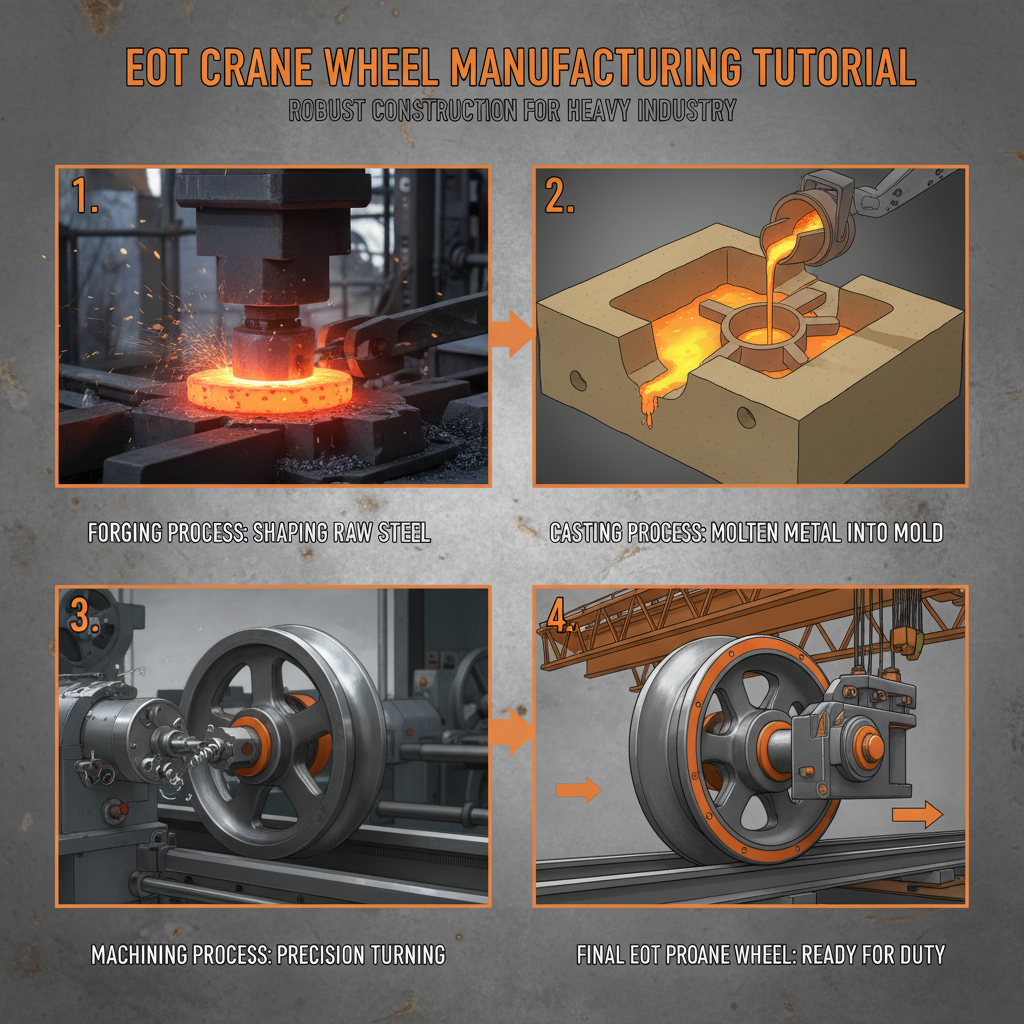
As global trade volumes increase, the demand for higher load-bearing capacity in rail-road systems has intensified. This evolution is driving the shift toward advanced forged solutions. Forging provides a superior grain structure compared to casting, which is essential for wheels that must support up to 16,000 kg while resisting the fatigue of repeated transitions between rail and road.
The challenge for current industrial operators is managing the trade-off between wheel longevity and operational cost. Lower-grade materials may offer initial cost savings but result in frequent replacements and increased downtime. Investing in precision-engineered alloys reduces the total cost of ownership by extending the time between scheduled inspections.
Looking ahead, the industry is moving toward more adaptive wheel profiles that can accommodate non-standard track gauges without sacrificing stability. This flexibility is critical for companies operating in diverse geographic regions where infrastructure standards may vary.
When evaluating potential suppliers among various axles manufacturers, procurement teams should utilize a structured framework. This involves assessing not only the material grade but also the manufacturer's ability to provide bespoke sizing and strict compliance with railway safety standards.
A critical part of this evaluation is the verification of the forging process. Since forged wheels offer higher structural integrity, confirming the use of precision machining and appropriate heat treatment is paramount to ensure that the components will not crack under heavy-duty loads.
The following table outlines the key selection considerations for rail-road wheels based on different operational intensities.
| Operational Intensity | Recommended Material | Key Design Focus | Maintenance Cycle |
|---|---|---|---|
| Light Industrial | Carbon Steel (C55/C60) | Standard Gauge Fit | Extended |
| Medium Freight | Alloy Steel (4140) | Tread Wear Resistance | Moderate |
| Heavy Port Logistics | High-Alloy (4340/42CrMo) | Fatigue Resistance | Strict/Frequent |
| Specialized Mining | Custom Alloy Steel | Impact Toughness | Intensive |
| Urban RRVs | Mixed Alloy Steel | Noise/Vibration Reduction | Moderate |
| High-Tonnage Bulk | Forged 42CrMo | Load Distribution | Scheduled/Precision |
The S1002 profile is a specialized tread design recognized for its ability to optimize contact between the wheel and the rail. It is engineered to provide smooth rolling performance and reduced wear, which enhances the overall safety and longevity of dual-mode vehicles by reducing friction and preventing surface deformation under heavy loads.
Material selection determines the wheel's resistance to fatigue and wear. Using high-quality alloy steels like 4140 or 42CrMo instead of basic carbon steel significantly increases the component's strength and durability. This reduces the frequency of cracks and deformations, especially in environments with constant loading and unloading cycles, thereby lowering long-term operational costs.
Yes. While they are designed for the 1435mm standard gauge, these wheels are highly customizable. Manufacturers can adjust the dimensions and flange design to fit custom track gauges, ensuring that Rail-Road Vehicles can operate across diverse industrial sites or specialized transportation networks without compromising stability.
Forged wheels possess a denser grain structure and higher mechanical strength than cast wheels. This makes them far more capable of handling extreme unit weights (up to 16,000 kg) and resisting the impact stresses associated with transitioning between rails and roads, which would typically cause cast components to fail prematurely.
By enabling vehicles to move directly from rail tracks to road surfaces, these wheels eliminate the need for cranes to lift cargo between different transport modes. This seamless transition streamlines the supply chain, reduces labor costs, and minimizes the risk of cargo damage during handling.
Procurement teams should ensure compliance with recognized international standards such as AAR M-208 and UIC 812-3. These standards govern the safety, load-bearing capacity, and dimensional accuracy of railway wheels, ensuring that the products are safe for high-tonnage industrial operations.
The transition toward more efficient, dual-mode logistics requires a fundamental commitment to component quality. By prioritizing advanced metallurgy and precision profiles, industrial operators can significantly reduce downtime and maximize the utility of their RRV fleets.
Whether optimizing for port-to-warehouse throughput or ensuring the stability of heavy freight on standard gauges, the synergy between material science and mechanical design remains the key to sustainable industrial mobility.