Finding reliable axles suppliers is critical for any operation involving heavy-duty transport, from rail-road vehicles (RRVs) to specialized industrial machinery. In the context of automotive and wheel manufacturing, the axle serves as the primary structural link between the chassis and the wheel, directly impacting load distribution and vehicle stability.
Procurement teams often struggle with balancing material durability against cost, especially when sourcing components that must withstand continuous heavy loading and harsh environmental stress. The primary challenge lies in identifying a manufacturer capable of precision forging and metallurgical control to prevent fatigue failure in critical load-bearing zones.
This analysis provides a detailed framework for evaluating axle manufacturers, focusing on material specifications, custom forging capabilities, and the technical requirements for high-performance industrial axles, enabling buyers to make informed procurement decisions based on engineering facts.

Material Specifications for Industrial Axles

The longevity of an axle is fundamentally determined by its chemical composition and heat treatment. For high-stress environments, carbon and alloy steels are preferred due to their ability to maintain structural integrity under cyclical loading. Common grades used in high-performance axles include C55, C60, and 65Mn for general durability, while 4140, 4330, and 4340 are selected for their superior fatigue resistance and hardness.
Advanced alloy options like 42CrMo provide an optimal balance of tensile strength and ductility, which is essential for axles operating in environments where sudden impact loads occur. Selecting the correct material grade ensures that the component can handle specified unit weights—ranging from lightweight applications to heavy-duty requirements up to 16,000 kg—without premature deformation.
Precision Forging vs. Casting for Heavy-Duty Axles
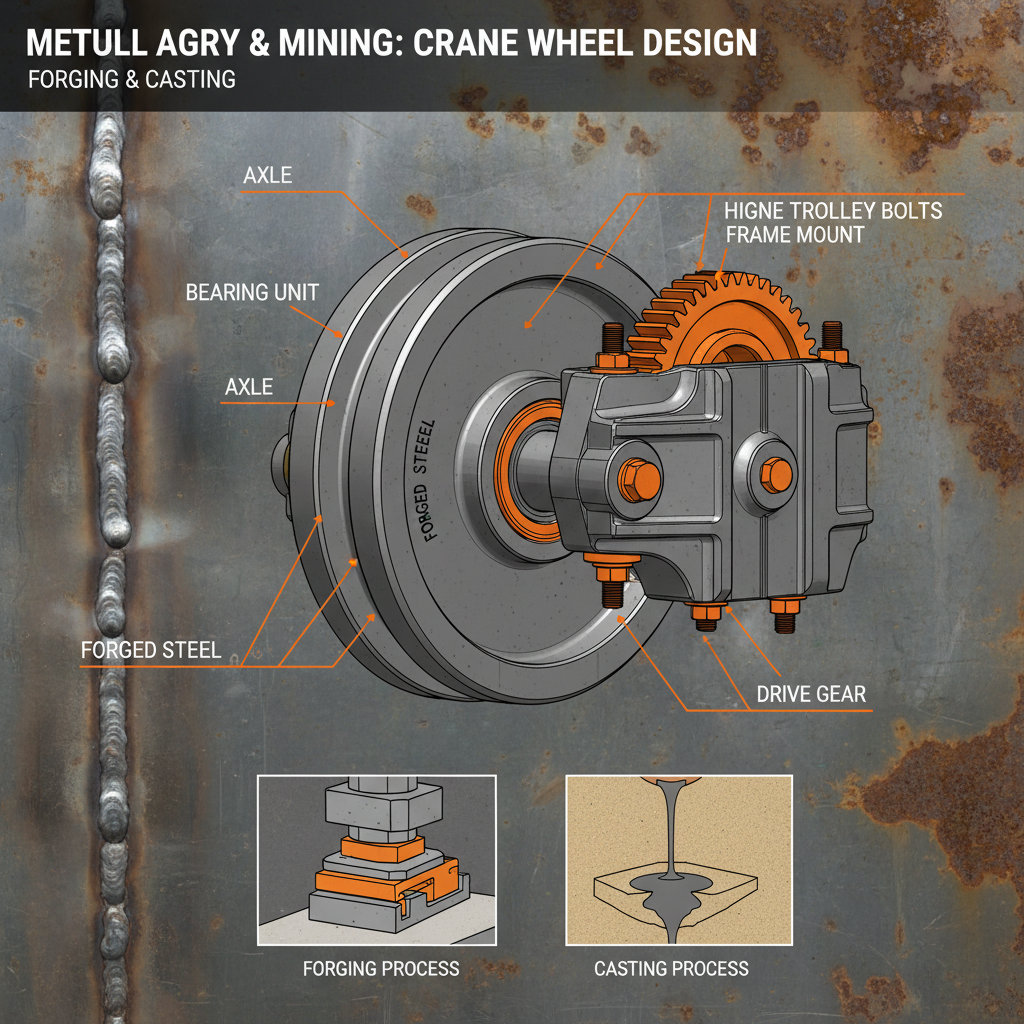
Forging is the preferred manufacturing method for critical axle components because it aligns the grain flow of the metal with the shape of the part. This structural alignment significantly increases the strength-to-weight ratio and impact resistance compared to casting. In the automotive wheel and axle industry, forged solutions are essential for parts that face extreme torsion and shear forces.
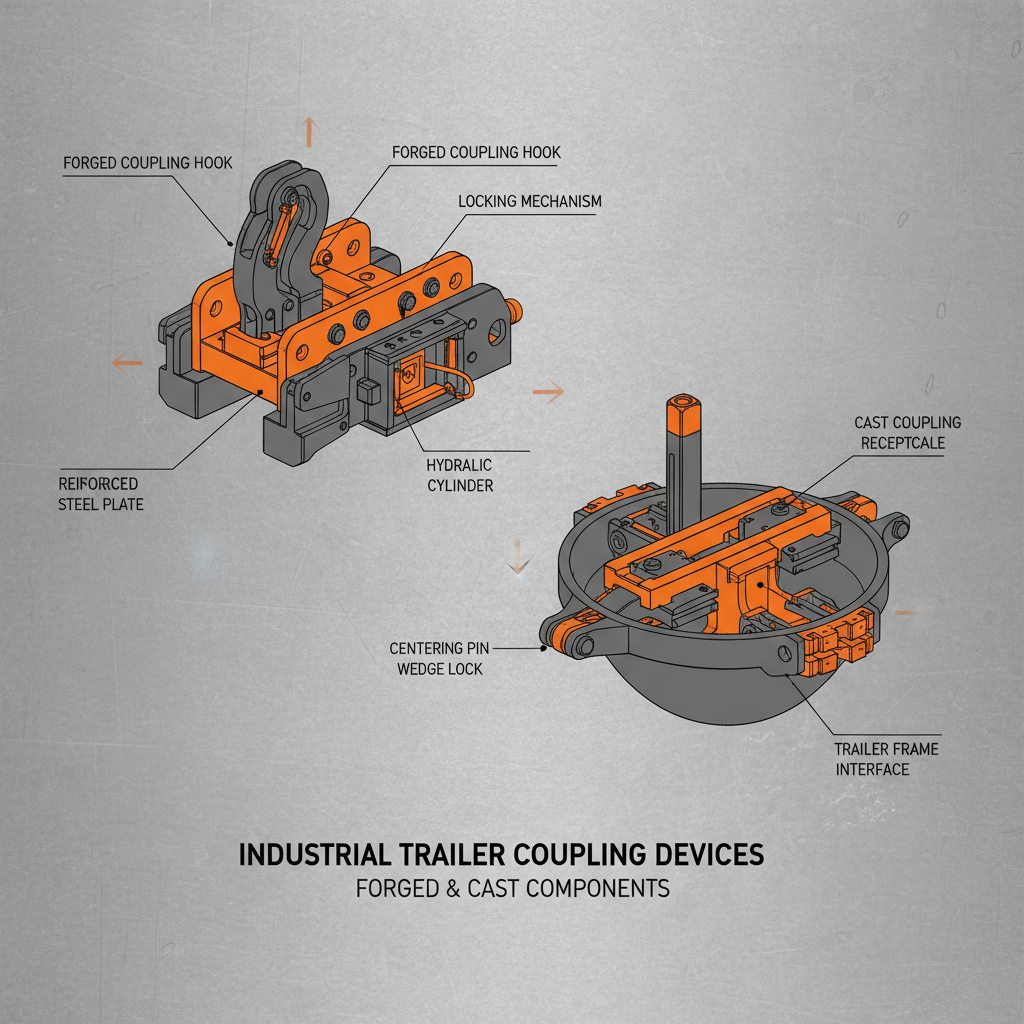
Precision forging minimizes internal voids and porosity, which are common weaknesses in cast parts. For components like trailer couplings, drawbar eyes, and specialized axles, forging ensures that the part can meet stringent safety standards. By controlling the forging temperature and pressure, manufacturers can achieve precise dimensional tolerances that reduce the need for extensive secondary machining.
Application Scenarios in Dual-Mode Transport
Axles designed for Rail-Road Vehicles (RRVs) must solve a unique engineering conflict: they must provide the rigid guidance required for rail tracks while maintaining the flexibility and durability needed for road travel. This requires high-precision flanged designs and specific tread profiles, such as the S1002 profile, to ensure smooth rolling performance and reduced wear during transitions.
In port and warehouse logistics, high-performance axles enable "zero-crane" moves, allowing cargo to be transferred directly from docks to warehouses via dual-mode vehicles. This application demands axles that can withstand repeated high-load cycles without deformation, reducing overall handling time and the risk of cargo damage through seamless movement across different terrains.
Evaluation Metrics for Axle Performance
When auditing axles suppliers, procurement engineers use normalized scores to compare the relative performance of different material grades. The following chart illustrates a conceptual comparison of common alloy steels across key performance dimensions: hardness, fatigue resistance, ductility, impact strength, and wear resistance.
As shown in this illustrative framework, 42CrMo and 4340 typically score higher in fatigue and impact strength, making them the ideal choice for heavy-duty axles. Conversely, C60 and 65Mn offer excellent hardness and wear resistance, which is more suitable for axles with lower impact requirements but high abrasion levels.
Customization Parameters for Bespoke Axles
Standardized axles often fail to meet the needs of specialized industrial equipment. Customization usually begins with the diameter, where standard ranges (e.g., Φ300mm to 1000mm for rail-related components) are adjusted to match the specific vehicle weight and load-bearing requirements. Precise alignment of the axle diameter with the bearing housing is critical to prevent vibration.
Beyond dimensions, gauge compatibility is a primary customization factor. While 1435mm is the standard gauge, many industrial sites use custom track widths. Axles suppliers must be able to adapt the flange design and axle length to ensure accurate rail guidance without compromising the road-going performance of dual-mode vehicles.
Common Procurement Risks and Mitigation
The most significant risk in axle procurement is "material substitution," where a supplier uses a lower-grade carbon steel instead of the specified alloy to reduce costs. This often goes undetected until the part fails under load. To mitigate this, buyers should demand Material Test Reports (MTRs) and perform independent hardness testing on received batches.
Another common issue is improper heat treatment, which can leave the axle core too soft or the surface too brittle. This leads to either rapid wear or sudden cracking. Establishing a quality agreement that specifies the exact quenching and tempering process is the most effective way to ensure consistency across large production runs.
Supplier Evaluation Framework
Selecting the right partner requires a multi-dimensional analysis of their manufacturing capabilities. It is not enough to look at the price per unit; the total cost of ownership (TCO) depends on the axle's service life and the frequency of maintenance intervals.
| Supplier Type | Core Strength | Best Use Case | Main Risk |
|---|---|---|---|
| Standardized Manufacturer | Low Unit Cost | General Transport | Low Flexibility |
| Custom Forge Shop | Material Control | Heavy Industrial | Higher Lead Times |
| Integrated Wheel/Axle Firm | System Synergy | Dual-Mode RRVs | Complex Pricing |
| Budget Cast Supplier | Rapid Delivery | Light Duty/Prototypes | Internal Porosity |
| Specialized Rail Supplier | Gauge Precision | Railway Systems | Niche Application |
| High-Alloy Expert | Fatigue Life | Extreme Environments | Premium Pricing |
For companies requiring a combination of precision and value, integrated suppliers like Potentia Manufacturing Ltd. provide a strategic advantage by utilizing their own machine shops and casting areas to maintain quality control while remaining cost-competitive.
Frequently Asked Questions
For extreme load and fatigue resistance, alloy steels like 4140, 4340, and 42CrMo are the best choices. For general industrial use where wear resistance is the priority over high impact, C55 and C60 are commonly used.
Forging mechanically compresses the metal, aligning the internal grain structure to follow the contour of the axle. This eliminates internal voids and significantly increases the component's resistance to impact and fatigue failure.
The S1002 profile is specifically engineered for railway applications to ensure smooth rolling, reduce rail wear, and improve contact stability, which is essential for the safety and longevity of dual-mode vehicles.
Yes, professional axles suppliers can customize axle length, flange width, and diameter to match any custom track gauge, ensuring precise guidance and stability for specialized industrial rail systems.
Buyers should request a Material Test Report (MTR) from the supplier and perform random spot checks using a Rockwell or Brinell hardness tester to ensure the material matches the specified grade.
The most common causes are material fatigue due to overloading, stress concentration from poor machining, and surface cracking caused by improper heat treatment or corrosive environments.
Conclusion
Selecting the right axles suppliers requires a shift from focusing on unit price to evaluating total structural integrity. By prioritizing forged alloy steels, verifying metallurgical specifications, and ensuring precision customization for gauge and load requirements, industrial operators can significantly reduce downtime and maintenance costs.
For organizations seeking high-performance forged solutions that combine material excellence with competitive pricing, detailed product information is available at www.thewheelmaker.com to assist in technical evaluation and procurement.