- Tel: +86 311 82620404
- Cell: 86 -13739710551
- Email: sales@potentia.cn

Selecting the right heavy-duty wheel components for industrial rail-road vehicles (RRVs) often comes down to the technical precision of the partner you choose. For operators managing dual-mode fleets, the challenge lies in finding a crane wheels supplier that can balance the rigid requirements of rail guidance with the durability needed for road travel. This intersection of metallurgical strength and precision machining determines whether a fleet maintains high uptime or suffers from frequent, costly replacements.
The criticality of these components is magnified in high-throughput environments like ports and warehouses, where the transition between track and pavement occurs repeatedly. When wheel profiles fail to maintain optimal rail contact, the result is increased wear, vibration, and potential safety hazards. Consequently, the industry is shifting toward engineered solutions—such as the S1002 profile—which are specifically designed to reduce rolling resistance while supporting massive unit weights up to 16,000 kg.
This analysis explores the technical specifications and procurement logic necessary to optimize heavy-duty mobility systems. By examining the synergy between alloy compositions and profile design, we can identify how to maximize the service life of specialized rail wheels. For procurement teams seeking a reliable crane wheels supplier, understanding these engineering variables is the first step toward operational excellence.


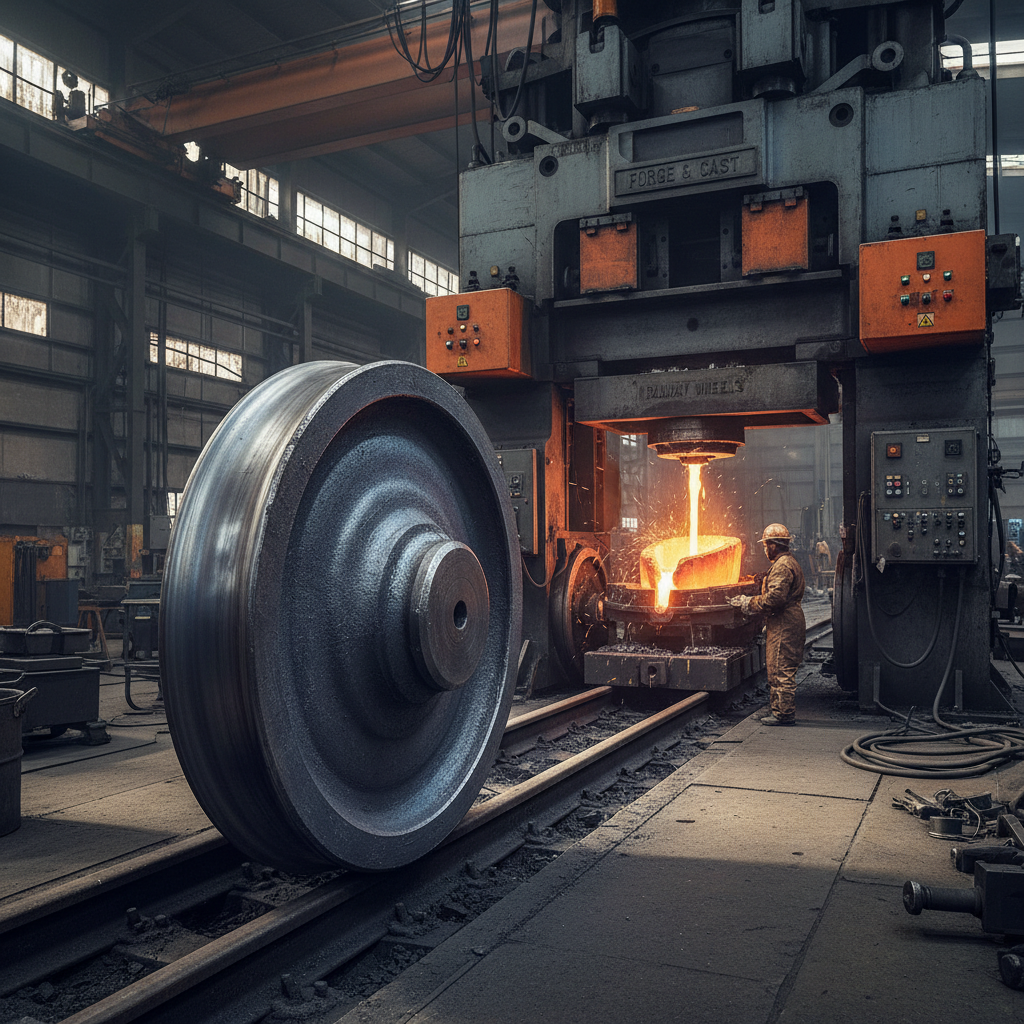
The S1002 profile is a specialized engineering standard widely recognized in railway and RRV applications for its ability to maintain smooth rolling performance. Unlike generic wheels, the S1002 is calibrated to enhance rail contact and reduce surface wear, which is essential for vehicles that must navigate both fixed tracks and road surfaces without compromising stability. This geometry ensures a precise distribution of pressure across the tread, minimizing the risk of flat spots and premature deformation under heavy loads.
From a structural standpoint, these wheels are designed for extreme versatility. With standard diameters ranging from Φ300mm to 1000mm, they can be tailored to the specific axle configurations of various industrial vehicles. Their compatibility with the 1435mm standard gauge, alongside the ability to adapt to custom track widths, makes them a flexible solution for complex industrial sites where infrastructure may vary between different sectors of the facility.
The longevity of a rail wheel is primarily determined by its metallurgical composition. For high-stress operations, the use of high-quality carbon and alloy steels is non-negotiable. Grades such as C55, C60, and 65Mn provide the necessary baseline hardness, while advanced alloy steels like 4140, 4330, 4340, and 42CrMo are employed to enhance fatigue resistance and toughness. These materials prevent the propagation of micro-cracks during the repeated impact cycles typical of freight and passenger applications.
The integration of 4340 and 42CrMo alloys specifically targets the reduction of stress concentration, ensuring that wheels can support unit weights up to 16,000 kg while maintaining structural integrity during frequent loading and unloading cycles.
Furthermore, compliance with international standards such as AAR M-208 and UIC 812-3 guarantees that the materials used meet the most stringent safety and performance benchmarks. By aligning material selection with the expected operating load and environmental harshness, companies can significantly extend the mean time between replacements (MTBR), thereby lowering the total cost of ownership for their RRV fleets.
Precision flanging is the core mechanism that ensures accurate rail guidance. In dual-mode vehicles, the single flange design of the S1002 series is critical because it provides the necessary lateral constraint to keep the vehicle on the track while minimizing the friction and resistance that would otherwise hinder road performance. This balance is what allows for a seamless transition between different terrains.
Optimized flange profiles reduce vibration and hunting oscillation at higher speeds, which directly translates to reduced wear on both the wheel and the rail infrastructure, enhancing overall system safety.
When this alignment is precise, the operational efficiency of the vehicle increases. Reduced rolling resistance means lower energy consumption for the propulsion system and less thermal stress on the wheel bearing. For industrial operators, this means a more stable ride for cargo and a significant reduction in the man-hours required for routine wheel profile inspections.
Different alloy choices result in varying performance characteristics depending on the operational environment. For example, while C60 provides excellent surface hardness for light-to-medium loads, alloy steels like 42CrMo offer superior deep-hardening properties and impact strength, which are vital for heavy-duty mine cart or RRV applications. The choice of material must be matched to the specific tonnage and frequency of the operation.
The following data represents the relative performance indices of common materials used in the S1002 series, where higher values indicate better performance in that specific category. This comparative approach helps procurement managers select the optimal grade based on whether their priority is wear resistance, fatigue strength, or cost-efficiency.
One of the most impactful applications of the S1002 series is the enabling of "zero-crane" moves. By utilizing dual-mode RRVs equipped with high-performance steel rail wheels, port operators can transfer cargo directly from dock-side rails to warehouse floors. This eliminates the need for intermediary crane lifts, which are often the primary bottleneck in supply chain throughput and a major source of potential cargo damage.
This capability is made possible by the combination of precise flanged alignment and the ability of the wheels to sustain heavy loads during the transition from rail to road. For logistics managers in Japan, Russia, and Europe, this shift has transformed the efficiency of bulk inport requirements, allowing for a more fluid movement of export cargo and reducing the dependency on expensive heavy-lifting equipment.
The evolution of rail-road mobility is moving toward increased specialization and smarter material integration. We are likely to see a greater emphasis on customized tread profiles that can be optimized for specific track gauges and road textures. As industrial complexes grow more integrated, the demand for wheels that offer zero-compromise performance in both modes will drive the adoption of even more advanced alloy treatments.
Furthermore, the integration of linear guide wheel technology is expected to further refine the precision of rail contact. This will likely lead to a reduction in the energy required for movement and a decrease in the noise pollution associated with heavy industrial transport. The focus is shifting from simple durability to "intelligent durability," where the wheel is engineered for the specific lifecycle of the vehicle.
For manufacturers and suppliers, the challenge will be to maintain competitive pricing while implementing these higher-grade materials and precision machining processes. The ability to offer bespoke diameters and gauge compatibility will remain the primary differentiator for a world-class crane wheels supplier in the coming decade.
The most frequent challenge in RRV operations is accelerated wear during the transition between rail and road. This is often caused by misalignment or the use of materials that are too hard (becoming brittle) or too soft (deforming). The S1002 series addresses this by utilizing a balanced alloy composition that provides enough elasticity to absorb road shocks while maintaining the hardness required for rail contact.
Another significant issue is the accumulation of debris in the flange area, which can lead to derailment or increased friction. Precision machining of the flange profile ensures that there are fewer catchment points for debris, while the use of high-grade alloy steels reduces the surface pitting that typically traps contaminants.
To assist procurement teams in selecting the right configuration, the following table summarizes the relationship between operational requirements and the recommended technical specifications of the S1002 series.
| Application Type | Rec. Steel Grade | Load Profile | Key Priority |
|---|---|---|---|
| Port Logistics | 42CrMo / 4340 | Ultra-Heavy | Wear Resistance |
| Mine Carting | 65Mn / C60 | Heavy | Impact Strength |
| Warehouse RRV | C55 / 4140 | Medium | Smooth Rolling |
| Freight Transit | ER7 / 4330 | Heavy | Fatigue Life |
| Custom Forgings | Bespoke Alloy | Variable | Precision Fit |
| Urban Logistics | C60 / 4140 | Medium | Low Noise |
The S1002 profile is engineered specifically for smooth rolling performance and reduced wear in railway and RRV applications. Its primary advantage is the optimization of the rail contact area, which reduces rolling resistance and enhances safety by providing more stable guidance. This makes it ideal for vehicles that must transition between rails and roads, as it minimizes the surface deformation typically associated with dual-mode operations.
For high-load operations, alloy steels such as 42CrMo, 4330, and 4340 are highly recommended. These materials offer superior fatigue resistance and toughness compared to standard carbon steels. They are designed to withstand continuous heavy-duty loading without cracking or permanent deformation, which is critical for maintaining the safety of freight and passenger rail systems under extreme stress.
Yes, while the S1002 series is standardized for the 1435mm gauge, it is fully customizable. Manufacturers can adapt the wheel dimensions and flange specifications to meet custom track gauges without compromising the structural integrity or performance of the wheel. This flexibility allows operators to integrate these wheels into diverse industrial environments with unique infrastructure requirements.
Downtime is reduced primarily through the use of premium-grade alloys and precision machining, which extend the service life of the wheel. By resisting surface wear, cracking, and deformation, the S1002 series requires fewer inspections and less frequent replacements. Additionally, the reduced friction and vibration protect the axle and bearing systems, lowering the overall maintenance burden on the vehicle fleet.
The S1002 series is designed to be highly scalable, supporting unit weights ranging from as little as 1 kg to as much as 16,000 kg. This wide range allows the wheels to be used in everything from small automated guided vehicles (AGVs) in warehouses to massive heavy-duty rail-road vehicles used in port logistics and mining operations.
Zero-crane movement is achieved by using dual-mode RRVs that can travel on rails and then transition directly to road surfaces to reach a warehouse. The S1002 wheels provide the necessary stability and load-bearing capacity to move heavy cargo across these different terrains. This eliminates the need for a crane to lift cargo from a rail car to a truck, significantly speeding up the supply chain and reducing handling risks.
The efficiency of heavy-duty rail and road transport depends heavily on the synergy between profile design and material science. As demonstrated, the S1002 series provides a robust solution for dual-mode vehicles by balancing the need for precise rail guidance with the durability required for road travel. By utilizing high-strength alloys and adhering to international standards like AAR M-208, industrial operators can significantly reduce maintenance costs and maximize the operational lifespan of their fleets.
For organizations looking to optimize their logistics throughput and reduce downtime, partnering with an experienced manufacturer is essential. Whether you are managing port-to-warehouse transitions or heavy mining operations, the right wheel configuration can be the difference between operational bottlenecks and seamless mobility. To explore customized forging solutions and technical specifications, you can learn more at www.thewheelmaker.com.