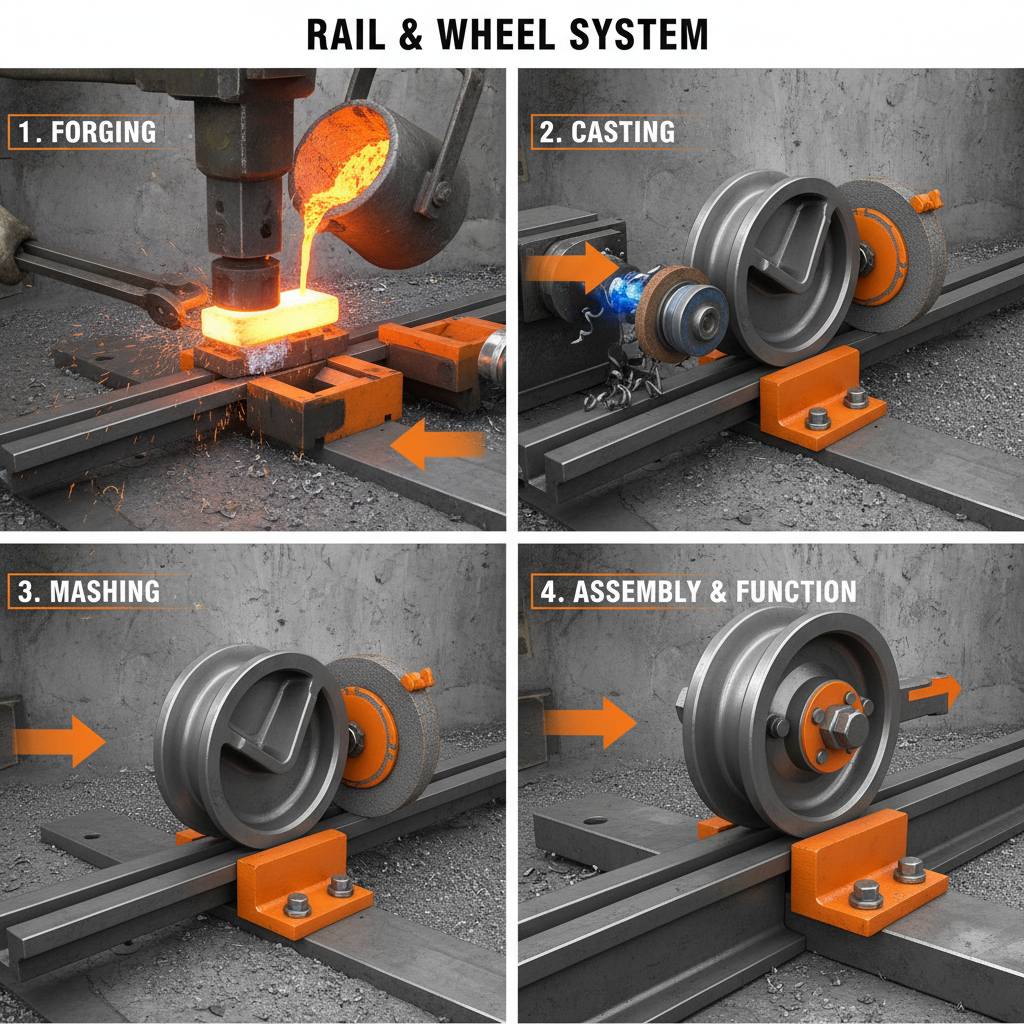
In the specialized world of heavy-duty towing and industrial hauling, the efficiency of connection points is paramount to operational safety. A swivel drawbar eye serves as a critical mechanical interface, allowing for the flexible connection of trailers or heavy equipment to a towing vehicle while mitigating the stress caused by misalignment. By enabling rotational movement, these components prevent the catastrophic failure of chassis frames and towing hitches during complex maneuvers.
Across global logistics and construction sectors, the demand for high-strength forging solutions has intensified as payloads increase and terrain becomes more challenging. The integration of advanced metallurgy ensures that these connection points can withstand immense tensile forces and repetitive cycling without succumbing to fatigue. Understanding the engineering behind these components is essential for fleet managers aiming to reduce equipment downtime and enhance worker safety.
Whether applied in railway-road vehicles or heavy industrial trailers, the use of a high-quality swivel drawbar eye ensures that the transition between different terrains is seamless. By reducing friction and distributing load more evenly, these components extend the lifespan of the entire towing assembly, making them an indispensable asset in modern material handling.
Global Relevance of the Swivel Drawbar Eye
On a global scale, the transportation of oversized and heavy-duty loads relies heavily on the integrity of coupling systems. According to international ISO standards for road vehicles, the ability to manage angular deviation between the tow vehicle and the load is critical for preventing jackknifing and structural failure. The swivel drawbar eye addresses this by providing a pivot point that accommodates the natural oscillation of heavy trailers during transit across uneven terrain.
In regions with developing infrastructure, where roads are often unpaved or uneven, the mechanical stress on towing eyes is significantly higher. The implementation of precision-engineered swivel mechanisms reduces the shear force applied to the hitch pin and the vehicle's frame. This global necessity has led to the adoption of high-grade alloy steels and rigorous forging processes to ensure these components can operate in the most extreme environments.
Defining the Swivel Drawbar Eye in Modern Industry
A swivel drawbar eye is a specialized forging component designed to provide a secure, yet flexible, connection point for towing. Unlike a fixed eye, the swivel variant incorporates a rotational axis that allows the eye to pivot independently of the drawbar arm. This simple yet effective design ensures that the towing link remains aligned with the direction of pull, even when the towing vehicle and the trailer are not perfectly parallel.
In the context of modern industrial needs, this component is essential for "dual-mode" transport systems, such as Rail-Road Vehicles (RRVs). These vehicles must transition between fixed rails and open roads, where the dynamics of towing change drastically. The swivel mechanism allows for the flexibility required to navigate tight corners in warehouses or port docks while maintaining the strength needed for high-tonnage hauls.
Beyond mere connectivity, the swivel drawbar eye represents a fusion of metallurgy and mechanical engineering. By utilizing materials like 42CrMo or 4340 alloy steel, these components are engineered to resist deformation under extreme pressure. This makes them vital for humanitarian relief operations and remote industrial zones where equipment failure could lead to critical delays in supply chain delivery.
Core Components and Engineering Factors
The durability of a swivel drawbar eye depends primarily on its material composition. High-quality carbon and alloy steels, such as C45 or 4140, are typically employed to ensure a high yield strength. This ensures that the eye does not stretch or ovalize over time, which would otherwise lead to excessive play in the coupling and increase the risk of disconnection.
Precision machining and heat treatment are the second core factors. A swivel drawbar eye must undergo rigorous quenching and tempering to achieve the perfect balance between hardness and toughness. If the material is too hard, it may crack under impact; if it is too soft, it will wear down rapidly. The pivot pin must also be precision-ground to minimize friction and ensure a smooth swivel action.
Finally, load capacity and gauge compatibility define the practical application of the component. Depending on the vehicle size, the diameter of the eye and the thickness of the drawbar arm are customized to support weights ranging from a few hundred kilograms to several thousand. This scalability allows the same engineering principle to be applied to everything from small utility trailers to massive industrial mine carts.
Global Applications and Use Cases
The practical application of the swivel drawbar eye extends across multiple heavy industries. In port operations, these components enable "zero-crane moves," where cargo is towed directly from the dock to the warehouse. By using RRVs equipped with swivel couplings, operators can maneuver heavy loads through tight corridors without the need for expensive lifting equipment, significantly increasing throughput.
In remote mining sectors, particularly in regions like Australia or Canada, these components are used in mine cart wheels and heavy haulage systems. The ability of the swivel mechanism to absorb shocks from rugged terrain prevents the breakage of axle assemblies. Similarly, in post-disaster relief, where makeshift roads are common, swivel-equipped towing systems allow for the safe transport of emergency supplies over unpredictable ground.
Performance Comparison of Swivel Drawbar Eye Designs
Long-Term Value and Reliability Advantages
The investment in a high-grade swivel drawbar eye translates directly into reduced operational costs. By minimizing the wear and tear on the towing vehicle's chassis, companies can extend the service life of their entire fleet. The reduction in stress concentrations means fewer cracks and deformations over the equipment's life cycle, which in turn decreases the frequency of costly emergency repairs.
Beyond the financial metrics, there is a significant safety advantage. A reliable swivel coupling reduces the risk of sudden disconnects during transport, protecting operators and surrounding personnel. This trust in the hardware allows for more aggressive operational schedules and the confidence to move heavier loads through more complex industrial environments, ultimately enhancing overall productivity.
Future Innovations in Towing Technology
The future of the swivel drawbar eye lies in the integration of "smart" materials and sensor technology. We are seeing the emergence of load-sensing couplings that can transmit real-time data regarding the tension and angle of the pull to the driver's dashboard. This allows for the immediate detection of overloading or dangerous misalignment, preventing accidents before they occur.
Additionally, the shift toward green energy and electric heavy-haulage vehicles is prompting a redesign of these components. Electric motors provide instant torque, which can put a sudden, intense strain on coupling points. New forging techniques using nano-structured steels are being explored to provide higher fatigue resistance without increasing the overall weight of the component.
Automation is also playing a role, with self-aligning swivel eyes that can automatically lock and unlock using hydraulic or electronic actuators. This reduces the need for manual intervention, enhancing safety in hazardous environments where human exposure to towing hitches is risky. These innovations ensure that the swivel drawbar eye remains a cornerstone of industrial logistics.
Overcoming Challenges in Swivel Drawbar Implementation
One of the primary challenges in utilizing these components is the environmental degradation caused by corrosion. In maritime ports or salt-heavy winter roads, the swivel pivot can seize due to rust, effectively turning a swivel eye into a fixed eye and increasing the risk of failure. The solution lies in advanced surface treatments, such as galvanization or the application of specialized anti-corrosive coatings.
Another common issue is the lack of standardization across different manufacturers, which can lead to compatibility problems. To overcome this, industry leaders are moving toward a more unified set of dimensions and load ratings. By adhering to strict international standards, companies can ensure that their swivel drawbar eye components are interchangeable across different brands of trailers and towing vehicles.
Finally, maintenance neglect often leads to premature failure. Implementing a predictive maintenance schedule—where lubrication and wear checks are performed based on tonnage hauled rather than calendar dates—can significantly extend the life of the swivel mechanism. Expert insights suggest that integrating automated lubrication systems into the drawbar assembly can virtually eliminate the risk of pivot seizure.
Technical Analysis of Swivel Drawbar Eye Material and Performance
| Material Grade |
Load Capacity |
Wear Resistance |
Application Suitability |
| C45 Carbon Steel |
Medium |
Moderate |
Light Industrial |
| 42CrMo Alloy |
High |
Excellent |
Heavy-Duty RRVs |
| 4340 Steel |
Ultra-High |
Superior |
Mining & Construction |
| ER7 Grade |
High |
High |
Railway Freight |
| 65Mn Spring Steel |
Moderate |
High |
Dynamic Load Hauling |
| Cast Alloy Steel |
Medium-High |
Moderate |
Custom Machinery |
FAQS
A fixed drawbar eye is welded or bolted in a static position, meaning any misalignment between the tow vehicle and the trailer creates immediate stress on the chassis. A swivel drawbar eye features a pivot point that allows the eye to rotate, absorbing angular deviations and reducing the risk of structural failure during turns or on uneven ground.
For high-tonnage applications, alloy steels such as 42CrMo, 4340, and ER7 are recommended. These materials offer a superior strength-to-weight ratio and higher fatigue resistance compared to standard carbon steels, ensuring the component can withstand repetitive heavy loading without permanent deformation.
Lubrication frequency depends on the operating environment. In clean industrial settings, monthly lubrication may suffice. However, in ports, mines, or salty coastal areas, weekly lubrication is advised to prevent the swivel pin from seizing due to corrosion and debris ingress.
Yes, professional manufacturers can customize the eye diameter, drawbar length, and pivot strength to match specific rail gauges (such as 1435mm) or custom industrial tracks. Customization ensures that the coupling is perfectly aligned with the vehicle's center of gravity and the track's operational requirements.
Key warning signs include "ovaling" of the eye (where the hole becomes egg-shaped), visible cracks around the pivot point, excessive play or "clunking" sounds during towing, and a seizure of the swivel movement. If any of these occur, the component should be replaced immediately to avoid catastrophic failure.
High-quality components are manufactured to meet stringent standards such as AAR or UIC in the railway sector and various ISO standards for road transport. Certifications ensure that the forging process, material quality, and load-bearing capacities have been independently verified for safety.
Conclusion
The swivel drawbar eye is far more than a simple connection point; it is a critical engineering component that ensures the safety, longevity, and efficiency of heavy-duty towing operations. By combining high-strength alloy steels with a flexible rotational design, these components mitigate structural stress, reduce maintenance costs, and enable the seamless movement of massive payloads across diverse industrial terrains. From port logistics to remote mining, the reliability of this pivot point is the linchpin of productive haulage.
As the industry moves toward automation and smarter materials, the importance of precision-engineered coupling systems will only grow. Investing in high-quality forged components today prevents the costly downtimes of tomorrow. For businesses looking to optimize their fleet performance and ensure maximum operational safety, choosing a dependable manufacturing partner is the first step toward long-term success. Visit our website: www.manufacturing-base.com