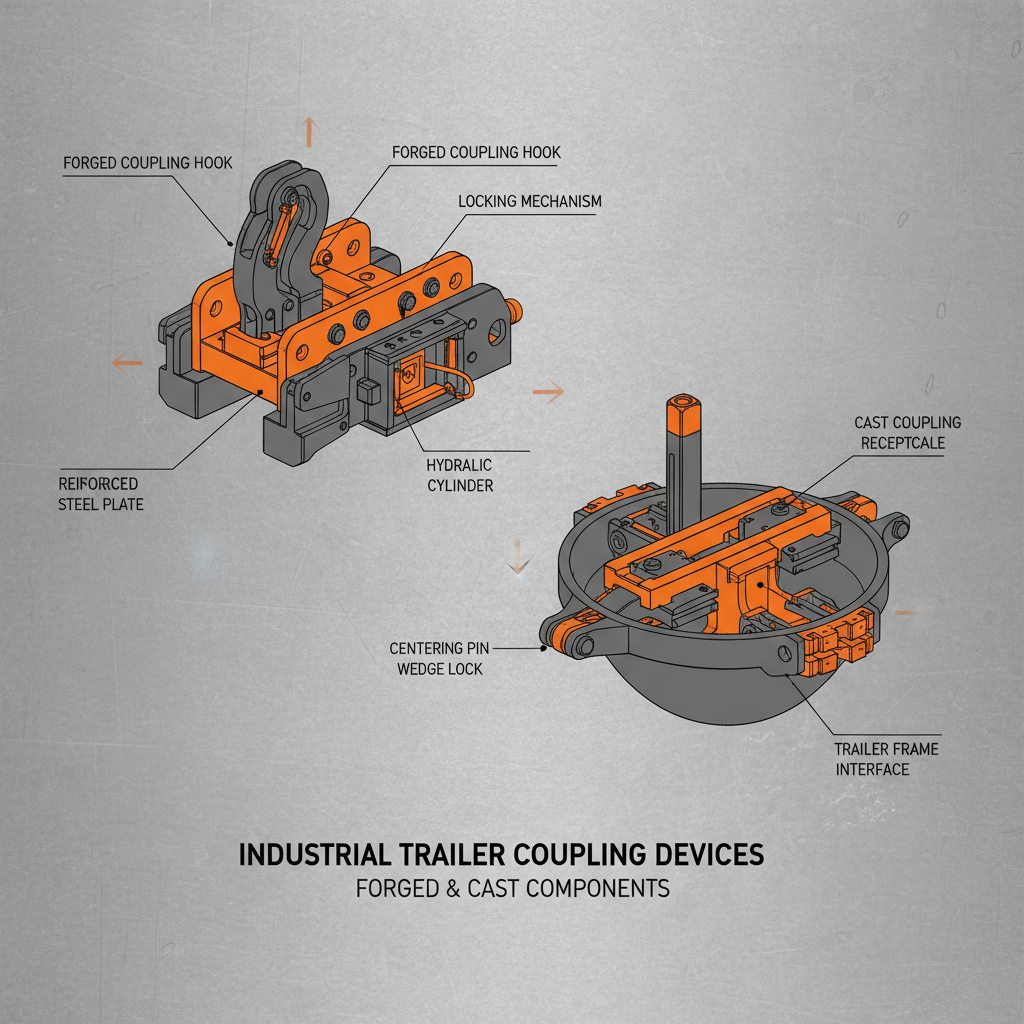
In the demanding world of heavy-duty hauling and industrial transport, the integrity of the connection between a towing vehicle and its trailer is paramount. This critical link relies on specialized components designed to handle immense tension and shock, ensuring that cargo is moved safely and efficiently across diverse terrains. Among these, the role of specialized forged attachments is indispensable for maintaining operational safety.
The global logistics and construction sectors face constant challenges in managing extreme loads, where mechanical failure at the hitch point can lead to catastrophic accidents and costly downtime. To mitigate these risks, engineers focus on stress distribution and material fatigue, seeking solutions that provide both rigidity and the necessary flexibility to handle lateral forces during complex maneuvers.
Selecting high-performance drawbar eyes is a strategic decision for fleet managers who prioritize long-term reliability. By utilizing reinforced forged steel and precision machining, these components ensure that heavy-duty operations in mining, agriculture, and infrastructure projects remain uninterrupted and compliant with rigorous safety standards.
Engineering Fundamentals of Drawbar Eyes
The engineering of these components centers on the calculation of theoretical horizontal traction force. For articulated trailers, the force is determined by the formula D(kN)=g.T.R/T+R, where T is the towing vehicle weight, R is the trailer weight, and g is gravity (9.81 m/s²). This ensures that the connection can withstand the specific pulling requirements without deformation.
For center-axle trailers, a similar logic applies using the formula DC(kN)=g.T.C/T+C. By ensuring the calculated value is equal to or less than the rated D-value of the connector, operators can guarantee that the attachment is capable of safely supporting the load during transit, especially when navigating uneven industrial landscapes.
Defining the Role of Drawbar Eyes in Towing
Drawbar eyes serve as the primary secure attachment point between a trailer and a towing vehicle, acting as the critical interface for heavy-duty hauling. Unlike standard coupling devices, these are specifically engineered to distribute stress evenly across the body of the component. This design philosophy minimizes the risk of structural deformation even when the equipment is subjected to extreme loads and sudden shocks.
In modern industry, these components are essential for the safe transport of massive machinery, agricultural implements, and construction materials. They provide the necessary strength to endure repeated tension and the jarring effects of rough terrain. Without this specialized engineering, the connection point would become a primary failure zone, leading to equipment damage or operational hazards.
Beyond simple strength, these attachments are categorized into various types, such as swivel variants and premier pintle eyes. While a standard eye provides a rigid connection, the swivel option introduces rotational movement, which is vital for reducing lateral stress on the vehicle frame and the trailer's structural integrity during tight turns or off-road navigation.
Core Components for Maximum Durability
The durability of drawbar eyes begins with the selection of materials. High-strength forged steel is the industry standard, as the forging process aligns the grain structure of the metal, providing superior toughness and resistance to impact compared to cast alternatives. This ensures the eye maintains its precise dimensions under maximum rated loads.
Precision machining is equally critical, as it ensures a perfect fit with the pintle hook. When drawbar eyes are machined to exact tolerances, the load is distributed more uniformly, preventing localized wear and reducing the frequency of maintenance. This synergy of material strength and geometric precision is what allows them to operate in the harshest environments.
Finally, the integration of swivel mechanisms represents a core functional component for advanced hauling. By allowing limited rotational movement, swivel drawbar eyes absorb directional shifts smoothly. This prevents the binding and twisting that often occurs with rigid attachments, thereby extending the lifecycle of both the coupling and the trailer attachment point.
Performance Metrics and Load Capacities
Evaluating the performance of towing components involves analyzing their ability to handle extreme pulling forces without failure. The primary metric is the D-value, which represents the maximum rated load the eye can sustain. High-quality forged versions are designed to exceed standard operational requirements, providing a safety margin that protects personnel and cargo in unpredictable conditions.
When comparing different designs, swivel mechanisms and reinforced pintle eyes show varying levels of effectiveness depending on the terrain. While a rigid eye offers maximum stability for straight-line hauling, the swivel variant significantly outperforms it in maneuverability and stress reduction during turns, as evidenced by the operational ratings below.
Performance Ratings of Different Drawbar Eye Types
Global Industrial Applications and Use Cases
In the mining sector, particularly in regions like Australia and Kazakhstan, equipment is subjected to extreme shocks and harsh, abrasive terrain. Here, premier pintle eyes and swivel variants are essential for transporting heavy machinery over unpaved routes. These components prevent lateral stress and binding, which is critical for maintaining an uninterrupted workflow in remote industrial zones where a single failure can stop production.
Agricultural and construction operations in Europe and the Americas also rely heavily on these attachments for hauling implements and trailers. The ability of a swivel drawbar eye to absorb directional shifts is invaluable when navigating tight farm tracks or congested construction sites. This flexibility not only protects the equipment but also increases the safety of the operator by ensuring a more stable towing experience.
Long-term Value and Safety Advantages
The long-term value of investing in premium towing components is measured by the significant reduction in maintenance costs and operational downtime. High-quality manufacturing ensures consistent material strength and precise dimensions, which prevents premature wear on the coupling and the trailer chassis. For procurement teams, this means a lower total cost of ownership over the lifespan of the fleet.
From a safety perspective, the use of reinforced forged steel provides peace of mind. The risk of catastrophic failure under extreme pulling forces is minimized, protecting both the cargo and the personnel involved in the operation. This reliability is especially critical in commercial logistics, where safety compliance is non-negotiable and a failure could lead to severe legal and financial liabilities.
Moreover, the ease of installation allows businesses to integrate these high-performance components into existing setups without requiring extensive modifications. By combining strength, flexibility, and durability, operators can ensure that their towing equipment performs optimally under the most challenging conditions, enhancing overall productivity.
Future Trends in Towing Component Innovation
The future of towing attachments is moving toward the integration of smarter materials and advanced metallurgy to further increase load-bearing capacities while reducing component weight. We are seeing a trend toward ultra-high-strength alloys that offer better corrosion resistance, which is vital for equipment operating in saltwater environments or chemically aggressive mining sites.
Digital transformation is also touching the hauling industry through the development of "smart hitches." While the core of the connection remains a mechanical eye, there is growing interest in incorporating sensors that can monitor real-time tension and stress levels. This data allows fleet managers to predict wear and schedule maintenance proactively, moving from reactive repairs to predictive maintenance.
Sustainability is another driving force, with a focus on reducing the carbon footprint of the manufacturing process. Forging techniques are becoming more energy-efficient, and the longevity of these components directly supports sustainability by reducing the need for frequent replacements and minimizing waste in the industrial supply chain.
Analysis of Towing Component Specifications and Performance
| Component Type |
Primary Material |
Stress Distribution |
Durability Score (1-10) |
| Standard Drawbar Eye |
Forged Steel |
Linear/Rigid |
7 |
| Swivel Drawbar Eye |
Forged Alloy Steel |
Rotational/Distributed |
9 |
| Premier Pintle Eye |
Reinforced Forged Steel |
High-Load Concentrated |
10 |
| Industrial Cast Eye |
Cast Iron/Steel |
Uniform/Rigid |
6 |
| Precision Machined Eye |
Hardened Steel |
Optimized Surface |
8 |
| Custom Forged Eye |
Custom Alloy |
Application-Specific |
9 |
FAQS
The primary advantage is the ability to allow rotational movement at the attachment point. This is critical when maneuvering on uneven terrain, as it absorbs lateral stress and prevents the connection from binding or twisting. By distributing torque more evenly, a swivel eye protects both the towing vehicle and the trailer's structure from premature wear and mechanical failure, significantly improving overall maneuverability.
For articulated trailers, use the formula D(kN)=g.T.R/T+R, where T is the towing vehicle weight and R is the trailer weight. For center-axle trailers, use DC(kN)=g.T.C/T+C, where C is the trailer weight. The resulting value must be equal to or less than the rated D-value of your drawbar eye to ensure the connection can safely withstand the theoretical horizontal traction force during operation.
Forging creates a refined grain structure that is aligned with the shape of the part, which dramatically increases the component's strength, toughness, and resistance to impact. Cast steel can have internal voids or a coarser grain structure, making it more prone to fracturing under extreme pulling forces or sudden shocks. For heavy-duty industrial hauling, forged steel is the only reliable choice for safety and longevity.
Premier pintle eyes are high-performance, reinforced forged steel attachments designed for the most extreme pulling forces. They should be used in heavy-duty industrial applications, such as mining or large-scale construction, where trailers carry immense loads over harsh terrain. Their reinforced design ensures precise alignment and maximum load-bearing capacity, minimizing the risk of failure under extreme tension.
Inspection frequency depends on the intensity of the operation. For heavy-duty mining or construction use, a weekly visual check for deformation, cracks, or excessive wear at the contact point is recommended. For general commercial use, monthly inspections are typically sufficient. Any sign of ovalization (deformation of the eye shape) or surface fracturing should result in immediate replacement to prevent catastrophic failure.
Yes, high-quality drawbar eyes are designed for straightforward installation. As long as the mounting dimensions and D-value requirements match the existing towing vehicle and trailer specifications, they can be integrated efficiently. Many businesses upgrade their fleets from standard to swivel or premier pintle eyes to improve safety and reduce maintenance without needing to redesign their entire trailer structure.
Conclusion
In summary, the selection of high-performance drawbar eyes is not merely a technical detail but a critical safety requirement for any heavy-duty hauling operation. By focusing on the engineering fundamentals of traction force, utilizing high-strength forged steel, and adopting swivel mechanisms to reduce lateral stress, businesses can ensure maximum operational reliability. The combination of material toughness and precision machining effectively minimizes downtime and prevents costly mechanical failures in the most demanding environments.
Looking forward, the integration of advanced alloys and predictive maintenance sensors will further refine the efficiency of towing connections. For fleet managers and procurement professionals, investing in premium, certified components today is the most effective way to guarantee long-term safety and sustainability. To ensure your equipment is ready for the toughest challenges, we invite you to explore our professional forging solutions. Visit our website: www.manufacturing-base.com