In the demanding world of industrial hauling and logistics, the structural integrity of a trailer's foundation is paramount to operational safety. The components that support the load and enable movement, specifically utility trailer axles, serve as the critical bridge between the cargo and the road. Understanding the engineering behind these components is essential for any fleet manager looking to maximize equipment lifespan and minimize costly downtime.
Across the globe, from construction sites in Europe to mining operations in Australia, the reliance on heavy-duty towing systems has grown exponentially. The challenge lies in balancing high load-bearing capacity with the flexibility needed to navigate uneven terrain. When these systems fail, the result is not just a loss of productivity, but a significant safety risk to personnel and expensive machinery.
Modern engineering has evolved to address these challenges through high-strength forged steel and precision machining. By optimizing the connection between the towing vehicle and the load—utilizing advanced components like utility trailer axles and specialized drawbar eyes—industries can achieve a seamless flow of materials even in the harshest environments.
Engineering Fundamentals of Utility Trailer Axles
The engineering of utility trailer axles revolves around the precise management of horizontal traction forces. For articulated trailers, the theoretical force is calculated using the formula D(kN)=g.T.R/T+R, where T is the towing vehicle weight and R is the trailer weight. This ensures that the connection points are engineered to withstand the exact gravitational and kinetic stresses encountered during transit.
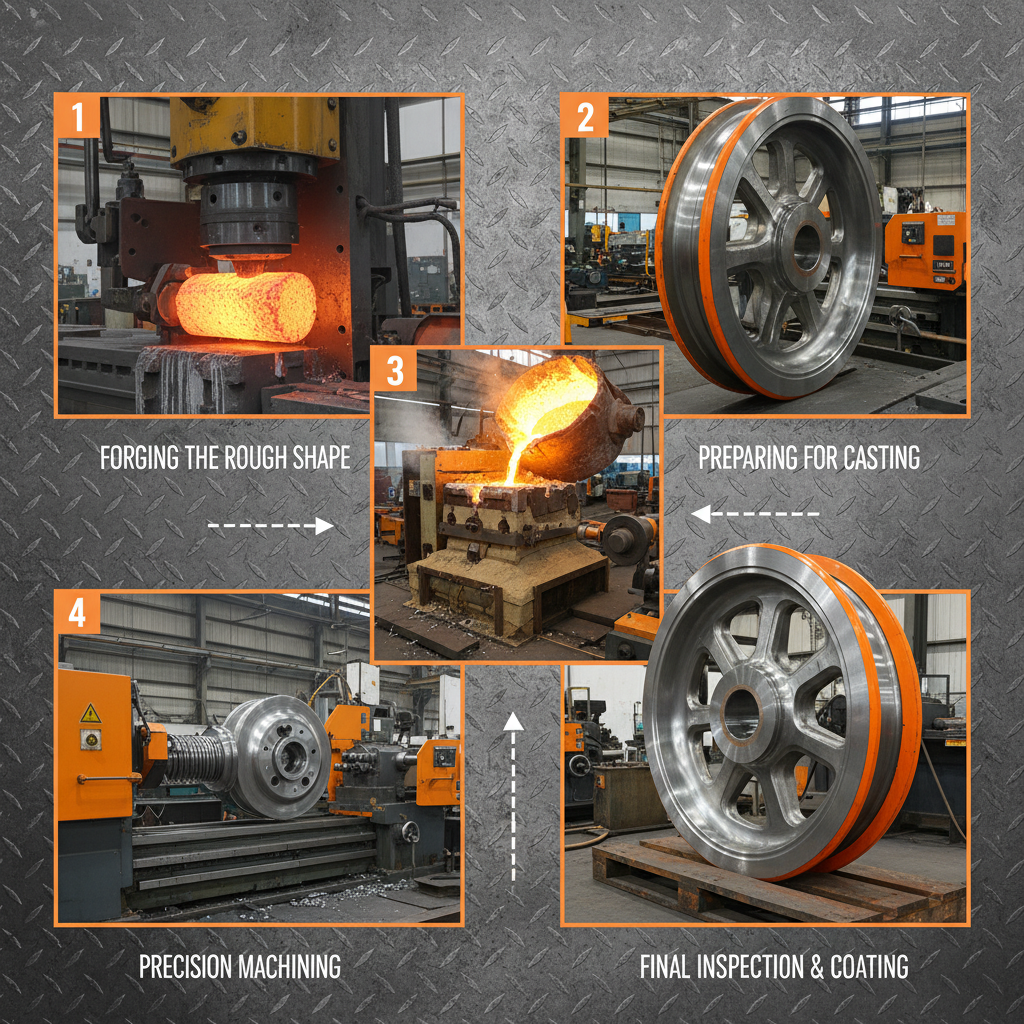
Precision is not merely about strength but about the distribution of stress. High-quality axles and accompanying drawbar eyes are designed to eliminate stress concentrations, reducing the risk of deformation under extreme loads. By using reinforced forged steel, these components can endure repeated shocks from uneven terrain without compromising the structural integrity of the vehicle.
Global Industry Relevance and Standards
In the global marketplace, the standardization of towing components is critical for interoperability and safety. International standards ensure that a trailer manufactured in one region can be safely towed by a vehicle from another, provided the load ratings are compatible. This consistency is vital for the international shipping and construction sectors, where modularity saves time and reduces costs.
The demand for high-performance utility trailer axles is particularly high in emerging economies where infrastructure development is rapid. In these regions, the ability to transport heavy machinery over unpaved roads requires components that exceed standard specifications, pushing manufacturers to innovate with higher-grade alloys and better heat-treatment processes.
Furthermore, safety compliance is now a primary driver for procurement teams. Regulatory bodies worldwide are tightening requirements for load-bearing certifications, making it imperative for businesses to source components from reputable suppliers like Potentia Manufacturing Ltd., who guarantee consistent material strength and precise dimensions.
Core Components for Heavy-Duty Hauling
A robust towing system extends beyond just the utility trailer axles; it involves a synergy of components including drawbar eyes and pintle hitches. Drawbar eyes provide the secure attachment point necessary for heavy-duty hauling, distributing stress evenly across the body to prevent premature failure under extreme tension.
The integration of swivel drawbar eyes is a game-changer for maneuverability. Unlike rigid attachments, swivel variants allow for rotational movement, which significantly reduces lateral stress on the utility trailer axles and the towing vehicle when navigating sharp turns or rough ground.
For the most extreme applications, premier pintle eyes constructed from reinforced forged steel are utilized. These components are precision-machined to maintain perfect alignment under maximum rated loads, ensuring that the connection remains intact even when the trailer is subjected to the violent shocks of mining or industrial environments.
Performance Metrics and Load Analysis
Evaluating the efficiency of a towing setup requires a deep dive into traction force and load distribution. For center-axle trailers, the formula DC(kN)=g.T.C/T+C is employed to determine the theoretical horizontal traction force. By ensuring the calculated DC value is equal to or less than the connector's rated D-value, engineers can guarantee a safety margin that prevents catastrophic failure during hauling.
Performance is further measured by the component's ability to absorb torque and directional shifts. A system that incorporates a swivel mechanism distributes torque more evenly, which directly correlates to a longer lifecycle for the axles and reduced wear on the coupling devices.
Load Distribution Performance of Various Axle-Coupling Setups
Global Applications in Industrial Zones
In the mining sectors of Australia and Kazakhstan, the application of heavy-duty utility trailer axles is a matter of operational survival. Equipment must transport massive loads over harsh, rocky terrain where the risk of axle fracture is high. The use of premier pintle eyes and reinforced axles ensures that mining fleets can operate with minimal downtime.
Similarly, in the agricultural hubs of Mexico and Spain, these components allow for the efficient transport of heavy machinery and harvests. The swivel functionality is particularly prized here, as it allows operators to navigate tight turns in orchards or fields without placing excessive lateral stress on the trailer's structural frame.
Long-Term Value and Operational Reliability
Investing in premium components leads to a significant reduction in the Total Cost of Ownership (TCO). While higher-grade forged steel axles may have a higher initial cost, they drastically reduce the frequency of maintenance and the likelihood of emergency repairs. For a fleet manager, this translates directly into increased uptime and predictable operational budgets.
Beyond the financial metrics, the human element of safety cannot be overstated. Reliability in towing components provides peace of mind to the operators. Knowing that a drawbar eye can withstand extreme pulling forces without deformation reduces the stress on drivers and increases the overall safety of the workplace.
The long-term value is also seen in the extended lifecycle of the entire vehicle. By reducing the vibration and shock transferred to the towing vehicle through the use of swivel mechanisms, the wear and tear on the engine and chassis is minimized, preserving the asset's value over several years of heavy use.
Future Trends in Trailer Axle Technology
The future of utility trailer axles is moving toward the integration of "smart" materials and sensors. We are seeing the emergence of load-sensing axles that can provide real-time data on stress levels, alerting fleet managers before a critical failure occurs. This shift toward predictive maintenance will redefine industrial hauling.
Sustainability is also playing a larger role, with research focusing on lighter, high-strength alloys that reduce the overall weight of the trailer without sacrificing load capacity. This reduction in weight leads to lower fuel consumption for the towing vehicle, aligning industrial operations with global green energy goals.
Automation and precision robotics in the manufacturing process, such as those employed by Potentia Manufacturing Ltd., are ensuring that components have tighter tolerances than ever before. This precision ensures a perfect fit, reducing the mechanical play that often leads to wear and tear in traditional axle setups.
Comparative Analysis of Axle Component Specifications
| Component Type |
Material Grade |
Load Capacity |
Durability Score |
| Standard Utility Axle |
Carbon Steel |
Medium |
6/10 |
| Forged Heavy-Duty Axle |
Alloy Forged Steel |
High |
9/10 |
| Swivel Axle System |
Hardened Steel |
High |
8/10 |
| Premier Pintle Eye Axle |
Reinforced Forged |
Extreme |
10/10 |
| Industrial Custom Axle |
Custom Alloy |
Variable |
8/10 |
| Agricultural Light Axle |
Mild Steel |
Low |
5/10 |
FAQS
The required capacity is determined by the theoretical horizontal traction force. For articulated trailers, use the formula D(kN)=g.T.R/T+R. Ensure that the rated D-value of your axles and connection components is equal to or greater than the calculated result to maintain a safe operational margin.
A swivel drawbar eye allows for rotational movement at the connection point. This is critical when navigating uneven terrain or making sharp turns, as it absorbs lateral stress and prevents torque from twisting the trailer frame or damaging the axles, thereby extending the equipment's lifespan.
Forged steel undergoes a process that aligns the grain structure of the metal, resulting in far superior strength and resistance to fatigue compared to cast steel. This makes forged components ideal for handling the repeated tension and shocks found in mining and construction.
In heavy-duty industrial environments, a monthly inspection is recommended. Focus on checking for hairline fractures, deformation of the drawbar eye, and lubrication levels. For extreme mining operations, weekly visual checks are advised to prevent catastrophic failure.
Yes, by replacing the fixed drawbar eye with a swivel variant and ensuring the axle housing is compatible with the new load distribution. This upgrade is highly recommended for fleets operating on rough terrain to reduce maintenance costs.
Common signs include visible deformation of the eye, unusual noise during turns, abnormal tire wear on the axles, or "binding" where the trailer does not follow the vehicle smoothly. If these occur, immediate replacement is necessary to avoid accidents.
Conclusion
The structural integrity of towing systems, centered around high-performance utility trailer axles and precision-engineered drawbar eyes, is the cornerstone of industrial efficiency. By applying rigorous mathematical formulas to traction force and selecting materials like reinforced forged steel, businesses can ensure that their hauling operations are both safe and sustainable. The synergy between strength and flexibility—exemplified by swivel mechanisms—not only protects the cargo but also drastically reduces the long-term cost of equipment maintenance.
Looking ahead, the integration of smart sensors and eco-friendly alloys will further refine the capabilities of towing technology. For procurement managers and fleet operators, the priority should remain the sourcing of components that exceed standard safety requirements. Investing in quality today prevents the failures of tomorrow, ensuring that heavy-duty operations continue to drive global industry forward. Visit our website for more professional solutions: www.manufacturing-base.com