The global logistics and hauling industry relies heavily on the integrity of towing components to ensure the safe transport of heavy machinery and materials. Among these critical components, the integration of reliable braking systems and structural supports is paramount for maintaining control over massive loads across diverse terrains. Understanding the mechanics of how these systems interact is essential for fleet managers and engineers aiming to optimize operational safety.
From construction sites in Europe to mining operations in Australia, the demand for high-performance towing hardware continues to grow. The challenge lies in balancing the immense pulling forces required for industrial transport with the need for precise deceleration and stability. Failure to implement the correct specifications in towing setups can lead to catastrophic equipment failure and significant operational downtime.
While many operators search for trailer axles with brakes to improve stopping power, the true efficiency of a hauling system depends on the entire connection chain. This includes the synergy between the axle, the braking mechanism, and the critical attachment points like drawbar eyes and pintle eyes that handle the primary traction forces.
The Mechanics of Traction and Braking Force
Calculating the theoretical horizontal traction force is the first step in ensuring that any system, including those utilizing trailer axles with brakes, can withstand operational stresses. For articulated trailers, the formula D(kN)=g.T.R/T+R (where T is towing vehicle weight, R is trailer weight, and g is 9.81 m/s²) determines the force required to pull the trailer horizontally. This calculation ensures the connection point is rated for the actual load.
Similarly, for center-axle trailers, the formula DC(kN)=g.T.C/T+C is used to find the traction force. Ensuring the D value of the connector exceeds the calculated force is a critical safety requirement. When paired with effective braking axles, this structural integrity prevents deformation during sudden stops or acceleration, protecting the vehicle and the cargo.
Defining High-Capacity Towing Systems
In the context of heavy-duty manufacturing, a high-capacity towing system is more than just a frame and wheels; it is a precision-engineered assembly designed to distribute extreme stress evenly. While many focus on the trailer axles with brakes for deceleration, the system's success depends on the attachment's ability to endure repeated tension and shock from uneven terrain.
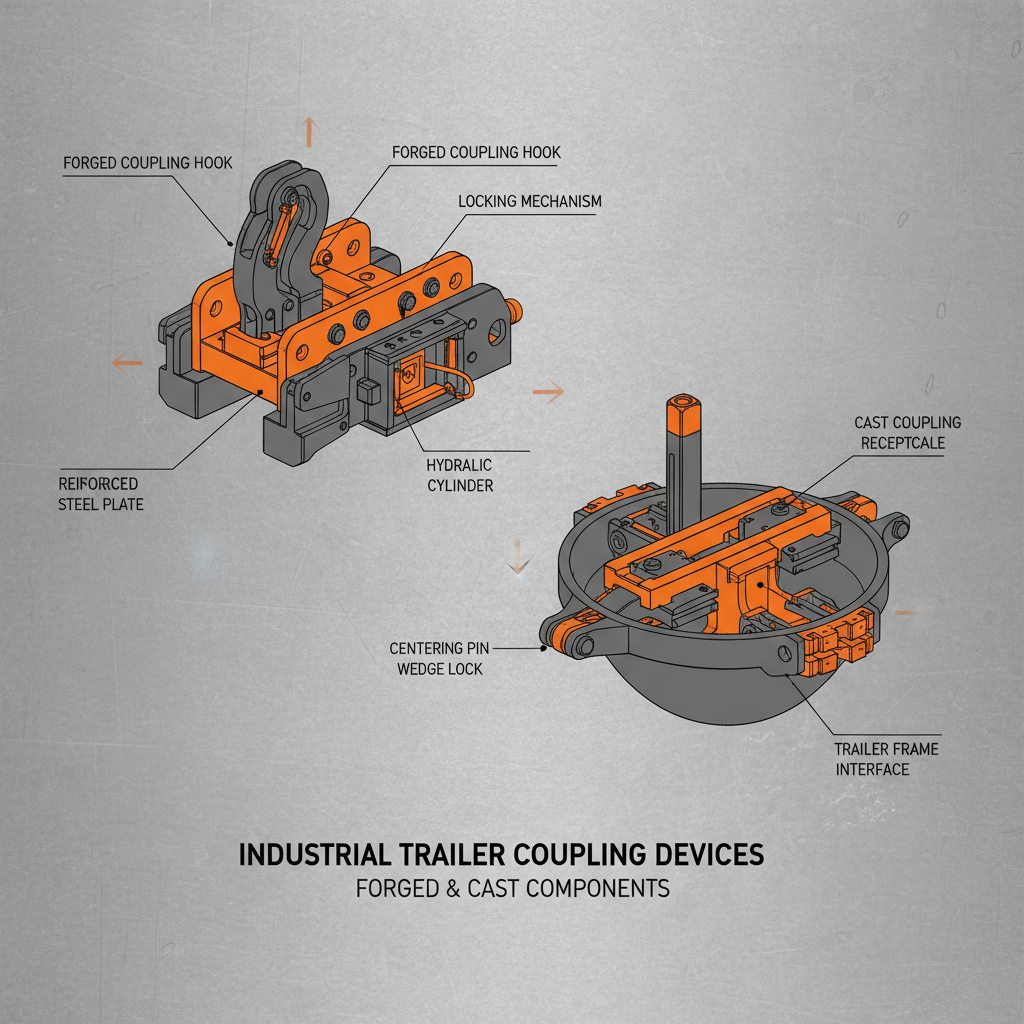
These systems are characterized by the use of forged steel and precision machining to minimize the risk of structural failure. Unlike standard coupling devices, professional-grade components are engineered to withstand the dynamic loads encountered in construction, agricultural transport, and industrial towing, where loads can shift unexpectedly.
The synergy between the pulling mechanism (such as a drawbar eye) and the stopping mechanism (the braking axle) creates a balanced system. This balance ensures that the towing vehicle maintains control regardless of whether it is navigating a steep incline or transporting heavy equipment across a mining site.
Core Components for Heavy-Duty Stability
The reliability of a trailer depends on its primary connection points. Drawbar eyes are essential for providing a secure attachment, distributing stress across the body to prevent deformation under extreme loads. When these are integrated with trailer axles with brakes, the entire vehicle gains a higher safety rating and better handling characteristics.
Swivel drawbar eyes further enhance this stability by allowing rotational movement at the attachment point. This is critical when maneuvering on uneven terrain, as it absorbs lateral stress that would otherwise damage the trailer's structure or the trailer axles with brakes during sharp turns or shifts in alignment.
For the most demanding applications, premier pintle eyes offer reinforced forged steel construction. These components ensure that the connection remains intact even under extreme pulling forces, providing the necessary strength to complement the stopping power of industrial-grade braking axles.
Performance Metrics of Braking and Towing
Evaluating the performance of a hauling system requires looking at both traction capacity and braking efficiency. A system equipped with high-strength forged components and trailer axles with brakes must be tested against lateral stress and longitudinal tension to ensure it meets ISO safety standards.
The ability to maintain alignment under tension reduces torque on the connection point, which directly impacts the wear and tear on the braking system. By distributing the load evenly, the lifespan of the axle and brakes is extended, reducing maintenance frequency and operational costs.
Comparative Efficiency of Towing Axle Systems
Global Industrial Applications
In the mining sectors of Australia and Kazakhstan, the combination of premier pintle eyes and trailer axles with brakes is essential for transporting massive equipment across harsh, unpaved terrain. These environments subject hardware to extreme shocks and heavy pulling forces, making forged steel components a non-negotiable requirement for safety.
Similarly, in the logistics hubs of Mexico and Spain, commercial towing operations utilize swivel drawbar eyes to improve maneuverability in tight urban or industrial spaces. This flexibility, paired with reliable braking axles, ensures that heavy loads can be navigated and stopped precisely, minimizing the risk of cargo damage and improving fleet efficiency.
Long-Term Value and Reliability
Investing in high-quality trailer axles with brakes and forged connection hardware provides tangible long-term value by reducing the frequency of mechanical failures. When components are engineered to exceed standard operational requirements, the result is a significant decrease in unplanned downtime and maintenance costs.
From a logical perspective, the use of reinforced materials prevents premature wear and tear on the towing vehicle's chassis. By absorbing torque and distributing loads evenly, these components protect the entire asset lifecycle, ensuring that the investment in the fleet yields maximum returns over several years of heavy use.
Beyond the financial aspect, there is an emotional value tied to safety and trust. Fleet managers gain peace of mind knowing that their operators are protected by hardware that can withstand the toughest challenges, reducing the risk of costly accidents and ensuring compliance with international safety regulations.
Future Innovations in Hauling Technology
The future of towing systems is moving toward smarter integration, where trailer axles with brakes may be augmented by electronic stability control and automated braking systems. These advancements aim to reduce the reliance on manual operator skill and replace it with sensor-driven precision to prevent jackknifing and load shifting.
Material science is also evolving, with the introduction of advanced alloys that offer the strength of forged steel but with reduced weight. This shift will allow for higher payload capacities without increasing the stress on the towing vehicle, further optimizing the efficiency of industrial logistics.
Sustainability is becoming a core driver, with a focus on reducing the carbon footprint of heavy hauling. Innovations in braking energy recovery and the use of recyclable high-strength materials are expected to become standard in the next generation of trailer axle and coupling designs.
Comparison of Towing Component Specifications for Industrial Use
| Component Type |
Material Grade |
Load Capacity |
Durability Score (1-10) |
| Standard Axle |
Cast Steel |
Medium |
6 |
| Braking Axle |
Forged Steel |
High |
8 |
| Drawbar Eye |
High-Strength Forged |
Very High |
9 |
| Swivel Eye |
Precision Forged |
High |
8 |
| Premier Pintle |
Reinforced Steel |
Extreme |
10 |
| Custom Forging |
Alloy Steel |
Custom |
9 |
FAQS
Trailer axles with brakes are preferred because they distribute the deceleration force across the trailer itself rather than relying solely on the towing vehicle. This prevents the trailer from pushing the towing vehicle forward during braking, which significantly reduces the risk of jackknifing and allows for much shorter, safer stopping distances when carrying extreme weights.
A swivel drawbar eye allows for rotational movement at the connection point, which reduces lateral stress on the trailer frame. By preventing binding and torque buildup during turns, it ensures that the trailer remains aligned, allowing the braking axles to function efficiently and consistently without the interference of chassis distortion.
While a standard drawbar eye provides a secure connection, a premier pintle eye is typically constructed from reinforced forged steel and designed for extreme pulling forces. It offers higher load-bearing capacity and tighter alignment, making it ideal for the heaviest industrial machinery and most demanding terrains.
For heavy-duty industrial use, a comprehensive inspection should be performed every 500 to 1,000 operating hours, or after any extreme load event. Key areas include checking for hairline fractures in the forged eyes, ensuring the braking axle's pads and drums are not overly worn, and lubricating all swivel points to prevent friction-based wear.
Conversion is possible but depends on the frame design. It requires the installation of braking drums or discs, as well as the integration of a braking actuator (air or hydraulic). For maximum safety and performance, it is generally recommended to use purpose-built trailer axles with brakes that are engineered for the specific weight rating of the trailer.
High-strength forged steel is the gold standard for mining environments. Forging creates a denser grain structure than casting, which allows components like drawbar eyes and axles to withstand repeated shock loads and extreme tension without failing, while precision machining ensures a robust finish against corrosion.
Conclusion
The operational success of any heavy-duty hauling fleet depends on the seamless integration of strength, flexibility, and stopping power. By combining the precision of forged connection points—such as swivel drawbar eyes and premier pintle eyes—with the reliability of trailer axles with brakes, businesses can ensure maximum safety and efficiency. The mathematical precision of traction force calculations, paired with high-grade material selection, forms the foundation of a system that minimizes downtime and maximizes productivity.
Looking forward, the industry must continue to embrace innovations in material science and smart braking technologies to meet the increasing demands of global logistics. For procurement teams and fleet managers, prioritizing high-strength forged components is not merely a safety choice but a strategic investment in the longevity of their equipment. To explore professional-grade towing and axle solutions, visit our website: www.manufacturing-base.com.